Posted By Cindy January 4, 2010
Some people are so desperate to attack high fructose corn syrup (HFCS) that they don’t worry about the facts.
An alert Corn Commentary reader sent us a link to this post from Mercola.com, which is basically a health product website. Kind of ironic that Dr. Mercola doesn’t like cola, isn’t it?
Anyway, so this Dr. Mercola headlines that “Scientists have proved for the first time that fructose, a cheap form of sugar used in thousands of food products and soft drinks, can damage human metabolism and is fueling the obesity crisis.” He provides a couple of links, one of which is to the actual study which was actually published back in April 2009 and involved people who were already overweight.
Apparently, the Times Online just discovered that study last month and decided that it proved HFCS “can cause dangerous growths of fat cells around vital organs and is able to trigger the early stages of diabetes and heart disease.” The story then got picked up by Tom Laskawy at Grist, who pretty much quoted it verbatim without checking it out at all - and then found out that “almost every sentence in the article contained at least one inaccurate statement,” according to one of the scientists who did the study! Laskawy did come back and made corrections in the post - blaming it all on the Times for misleading him - but says “the fundamental issue is that we consume too much sugar in any form.”
One of the main fact errors in the original article is that it equated fructose with high fructose corn syrup, which are not the same thing. But the facts didn’t matter to the author of the original Times Online article, and those who picked up on it failed to check it out themselves. That is how rumors get spread and reputations get ruined. This whole world wide web is a wonderful thing, but like the wild tales that spread via email, much of it is exaggerated at best and just plain lies at worst. A wise word for all of us in this immediate information age - check it out before you pass it on.
Posted By Mark December 9, 2009
Agriculture is broken. Our food is making us fat and killing us. Farming is horrible for the environment and I am having a bad hair day!
Who are these elitist whiners that seem hell bent on convincing us all that we are doing things wrong when it comes to feeding ourselves, clothing ourselves and even fueling our cars. To listen to this loud and often pompous minority you would think the sky is indeed falling Chicken Little…or maybe I should free range Chicken Little or even say Lettuce Little to be more politically correct.
Ok bozos, listen up….U.S. agriculture is a finely tuned machine that is the envy of the world because we are productive, increasingly efficient, and are improving our environmental footprint every day. I don’t have to read or believe the tripe you are selling just because you have wrestled the public megaphone away from the real experts.
In the past 25 years, U.S. farmers have been able to boost corn production by more than 40% due to improved varieties, better production practices and equipment advances, all while reducing their environmental impact. These and other similar advances have enabled hundreds of people, especially in developing countries, to greatly improve their diets.
So, note to Michael Pollan, Martha Stewart, Michael Mohr, Tim Searchinger and all the other self proclaimed experts in the world who wouldn’t know a cow pie from a moon pie if they were ankle deep in it…lots of people read romance novels, watch Real Housewives of (choose your location) but nobody takes any of it seriously. The unwashed masses think you are mildly amusing too.
You might generate a good discussion over the water cooler or prompt a laugh or two, but at the end of the day, nobody is making life changing decisions based on your self -proclaimed expertise.
Here are some real facts to facilitate your next discussion regarding our largest and most important industry:
98 percent of farms are family farms; corn yields have doubled since 1970 on fewer acres; amount of land to produce a bushel of corn down 37 percent; energy used to produce a bushel down 37%; emissions per bushel down 30%…and on and on.
The truth is we need to double food production by 2050 to feed our growing world. And we are well on our way to doing so while using the same or fewer resources.
The real food experts promote eating in moderation and from the four food groups because it is the wise thing to do, makes us healthier and with some exercise will increase our life span. With that said, get off my over fed backside. I hope your 15 minutes of fame are about done. This is America where if I choose to live on a diet of Nachos, Chicken wings, and a lard sandwich I can do so with a clear conscience.
I like going to bed each night knowing I have spent another day on this planet with freedom of choice, even if that means exercising bad choices. I sleep peacefully knowing that this Republic still works and those of the nay saying ilk are wasting a lot of energy constructing a food fad built on false assumptions. The American public is very good at smelling a rat.
For myself and the rest of the overfed masses I intend to protest too. I will not write a manifesto, blow up a state-of-the art research facility that could save thousands of lives, or even wear a funny mascot costume of biotech corn or a cute pink piggy. I intend to eat Ding Dongs and wash it down with soft drinks loaded with high fructose corn syrup until I have to buy a bigger size of pants. Democracy is cool and somewhere in the fine print of the Constitution it must say something about freedom to eat what I want, right after that freedom-of-speech-thingy!
Posted By Cindy October 21, 2009
The concept of taxing sodas seems to have hit a sweet spot with some as a means to pay for health care.
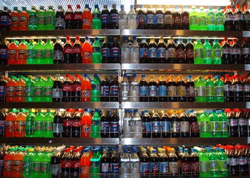 Always the leader in ideas like this, California plans to hold hearings in the state legislature next month that may lead to taxes or fees on soda as a way of addressing obesity and healthcare problems in the state. A hearing of the Select Committee on Obesity and Diabetes will “hear from experts regarding the growing scientific evidence of links between soda consumption and obesity.” Senator Alex Padilla (D-Pacoima) says they need “to do more to educate the public about the health effects of drinking too much soda and consider options for reducing soda consumption among children.”
That sounds all well and good. From the federal level all the way down to the local level there is increasing emphasis on educating people to make healthier food choices, which would includes drinking more water or milk and less sugary drinks. But, whether taxes on soda would be used for better education or to pay for health care costs associated with obesity, the losers will be consumers - especially those with the lowest incomes. An additional tax on beverages would most heavily impact the people who are struggling the most in the current economy. A tax of a penny an ounce would add 12 to 20 cents on the average soda.
 You may have seen the ads that Americans Against Food Taxes (AAFT) has been running opposing the concept of taxing food or beverages. AAFT notes that the food and beverage industry has already been working to reduce childhood obesity through innovation, nutrition education, and encouraging physical activity. Many, if not most, schools have removed soda machines and have limited the amount of high sugar, high fat foods and beverages in school lunch programs.
The biggest problem with the whole taxing concept is that it will probably not do anything to deter consumption, which is allegedly the goal, especially among the lower income groups. Proof of this is cigarette taxes. The prevalence of smoking is higher in those who have spent less time in school (9-11 years - incidence 38%) and those who are living on the poverty line (33%). It is very likely that a soda tax would have little impact - probably none at all - on the people who are most at risk for obesity-related illnesses.
You can join the fight and support AAFT’s efforts by going to www.nofoodtaxes.com.
Posted By Mark September 18, 2009
 A new opinion piece in the New York Daily News takes on the idea of raising billions of dollars through “lifestyle taxes” on things like soft drinks as being against consumer wishes and bad policy. Not only would a tax on soda generate a new revenue stream, but supporters claim that it would also drive down medical costs by reducing rates of obesity.
“For your own good” interventions are taking lots of forms these days: locking up other people’s liquor cabinets, confiscating salt shakers, installing an IRS bean counter into every vending machine. But the tax code shouldn’t be a tool for punishing companies who make beverages that some people choose to over-consume. Nor should it be an instrument for penalizing individuals who make “bad” food choices,” says J. Justin Wilson, a Senior Research Analyst at the Center for Consumer Freedom. (more…)
Posted By Cindy March 20, 2009
High fructose corn syrup (HCFS) is natural according to the FDA, but only products sweetened with sugar are getting that label on some new beverages.
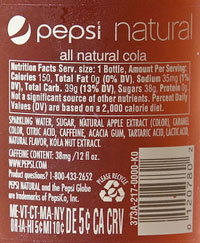 A Forbes article today draws attention to new “natural” soft drink products being marketed that use sugar instead of HFCS, saying that the Corn Refiners Association may be losing its battle “to restore a tarnished image.”
PepsiCo is actually launching three new products - Pepsi Natural, Pepsi Throwback and Mountain Dew Throwback - all sweetened with “natural sugar.”
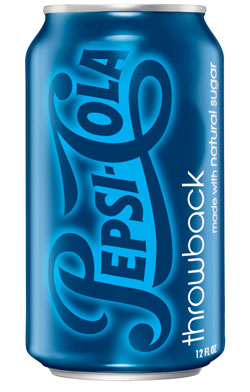 An all-new premium cola, Pepsi Natural is made with all-natural ingredients, including lightly sparkling water, natural sugar, natural caramel and kola nut extract….Pepsi and Mountain Dew are offering consumers a taste of the past with their own versions of Throwback, two new limited time only products inspired by the ’60s and ’70s, sweetened with natural sugar in a retro-look package.
We kind of get that same prejudice with sugarcane ethanol compared to corn ethanol - somehow it is more natural and better for the environment and the food supply - even though it takes land to produce it and is a food being made into fuel. Go figure.
The question with these sugar-based sodas will boil down to consumer demand. Do they taste good? Is it worth it to pay more for a “natural” premium soda, especially in the current economy? Time will tell if nature takes its course.
Pepsi Throwback and Mountain Dew Throwback will be available nationally for eight weeks only, beginning April 20.
Posted By Cindy December 8, 2008
Sweeteners are sweeteners - whether they are from sugar or corn - according to some new nutrition research.
 A supplement in the December 2008 edition of the American Journal of Clinical Nutrition that reviews the history and development of high fructose corn syrup “finds no scientific support for the hypothesis that high fructose corn syrup is causally linked to obesity in the United States or globally any more or less than other caloric sweeteners.”
A recent symposium brought together scientific leaders on this topic from varying backgrounds - including many who have been critical of high fructose corn syrup. From that symposium, a consensus emerged that HFCS “is in fact indistinguishable from sucrose in its metabolic effects.”
In fact, what they seem to agree on is (get ready for this shocker) …. “The true cause of the obesity crisis is more likely an increase in caloric intake overall.”
So, what they are saying is the cause for obesity in America is not really corn after all - it’s simply that we eat too much! Who would have thought that?
Posted By Cindy September 22, 2008
The Corn Refiners Association rolled out a national campaign this month promoting high fructose corn syrup (HFCS).
 The campaign includes ads on cable TV and in woman’s magazines, as well as full-page newspaper ads will appear in several major newspapers across the country. In addition, there is a great interactive website called “Sweet Surprise” which contains factual information about sugar, honey and other sweeteners as well as HFCS.
Featured prominently on the site is a “Sweet Smarts” quiz - which I took and totally failed. But, I learned a lot too - and that is the goal.
“There are so many myths, inaccuracies and untruths associated with this sweetener that we felt it was necessary to set the record straight,” said CRA president Audrae Erickson. “We hope to provide balanced information about high fructose corn syrup to allow consumers to make informed decisions based on science.”
Here’s some quick facts that may be a sweet surprise to many:
The American Medical Association (AMA) recently concluded that “high fructose corn syrup does not appear to contribute to obesity more than other caloric sweeteners.”
High fructose corn syrup has the same number of calories as table sugar and is equal in sweetness. It contains no artificial or synthetic ingredients.
Research confirms that high fructose corn syrup is safe and no different from other common sweeteners like table sugar and honey. All three sweeteners are nutritionally the same and all qualify as “natural” ingredients according to FDA labeling rules.
The website also has links to the television and print ads.
