The home of Harvard wants to advocate vegetarianism and veganism, complete with “Meatless or Vegan Mondays” to respond to the “climate emergency” they are facing.
According to a Fox News story, the Cambridge Climate Congress is proposing a variety of mandates to address the emergency “created by the growth of local greenhouse gas emissions despite the urgent warnings of climate scientists that substantial reductions are needed in order to reduce the risk of disastrous changes to our climate.”
In addition to new taxes and limits on everything from parking to plastic bags, they want to “advocate” less meat consumption. It sounds like they would like to actually tell people that they can’t eat meat and would “institute disincentives for the purchase of non-regional food.”
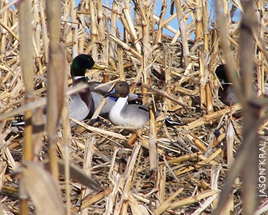
This is crazy talk. The article quotes Dr. Ken Green, a resident scholar on environment and energy at the American Enterprise Institute, about the regional food idea. “Trying to grow something out of season in a greenhouse locally may produce more greenhouse gas emissions than having the same food shipped in from a place where it grows naturally,” he said. “Studies do not come down uniformly on the side that local is better.” And as far as vegetarianism is concerned, there is definitely no agreement that eating less meat would have any kind of climate impact.
With the unbelievable snow events we have seen just in the last week, I would think we could use some of those greenhouse gases right now to warm us up a bit.
Nobody ever forgets their first love, even if they turn out to be a dirty, rotten scoundrel.
For all of California’s big talk about going green, the truth is they just can’t forget their first love - Big Oil. This photo is of Signal Hill in Southern California back in 1923. The hill became part of the Long Beach Oil Field, one of the most productive oil fields in the world. Signal Hill was covered with over 100 oil derricks, and because of its prickly appearance at a distance became known as “Porcupine Hill”.
You would think that after EPA reconsidered ethanol’s environmental benefits when issuing the RFS2 rule that California would take a second look at the homegrown fuel and make it part of their Low Carbon Fuel Standard. But last week’s action by the Southern California Association of Governments turning down federal funding to put in dozens of E85 fueling stations showed just how much the state is still in love with oil. Paul Wuebben, a clean fuels officer for the South Coast Air Quality Management District, urged the council to accept the dollars. Ethanol is not perfect, he said, but its wider use would reduce dependence on gasoline and remove pollutants from the air. He also called the panel’s decision a “major lost opportunity for the region.”
Wuebben attempted to sway the panel to reconsider along with Mike Lewis with Pearson Fuels, “It would have created 221 jobs. Dependence on foreign oil is the result of 1,000 little decisions and a few big decisions. This was a big decision.”
California lawmakers and bureaucrats believe that corn-based ethanol causes more harm than good for the environment after being transported from the Midwest. One recent article penned by Roland Hwang, Transportation Program Director for Natural Resources Defense Council in San Francisco, calls it “old, dirty ethanol.” Seriously? If ethanol is old and dirty, what does that make oil?
The Renewable Fuels Association did an analysis of the study, titled “Corn Ethanol and Wildlife,” that pretty much refutes everything the NWF claims. The RFA concludes that “selective and questionable use of data, unclear research methods, and emotional arguments cast doubt on the reliability of the conclusions and recommendations.”
The authors deliberately pick and choose certain data from certain years to support their conclusions. In many cases, the authors selected agricultural data points that are obvious outliers when viewed in the context of both mid- and long-term historical trends. As one example, the paper uses 2004 and 2007 data for comparisons of planted corn acres, but uses 2007 and 2009 data for a comparison of acreage enrolled in the Conservation Reserve Program (CRP).
RFA also notes that USDA data clearly show that recent expansion of corn acres nationally and in the four-state region examined in the NWF report came through crop switching, not through the conversion of native grassland, since total crop acres in the four states actually declined slightly from 2004 to 2007. On top of that, the NWF report uses “grossly outdated assumptions about growth in average corn yield per acre and the amount of ethanol yielded per bushel of corn” to suggest the biofuel requirements of the expanded Renewable Fuels Standard will demand an additional 10.69 million acres of corn by 2015 over 2009 levels.
The good news is that this report is generating virtually no coverage in the “mainstream media.” Maybe the media is too busy these days actually covering real news rather than made-up studies with an agenda.
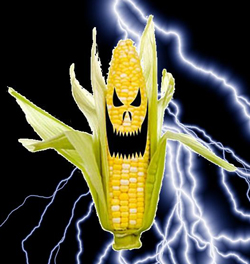
The “cornaphobics” are at it again, spreading more fears about the evil corn monster that is destroying the world.
This time it is a “new” study that finds “Monsanto’s GM corn is linked to organ damage in rats.” While the story has gotten little mainstream coverage, it was in the Huffington Post and on many environmental activist blogs with headlines like “Monsanto GMO Corn Linked to Organ Failure, Study Reveals.”
The study, published in the International Journal of Biological Studies, examined three genetically modified corn varieties created by Monsanto and found evidence of possible toxicity to the kidney and liver, “possibly due to the new pesticides specific to each GM corn.”
Discover’s 80 Beats calls it a “not entirely convincing finding of a potentially questionable study,” pointing out the study authors concluded there were “signs of toxicity rather than proofs of toxicity.” The Discover post also notes that the study was partially funded by Greenpeace, and that the International Journal of Biological Sciences is a “somewhat obscure” scientific publication. Read Monsanto’s response to the study here.
Granted, Monsanto is the company that everyone loves to hate, but there is no doubt that biotech corn has contributed significantly to our ability to feed the world for more than two decades and there seems to be no shortage of rats. Yet we hear from folks like “EcoEtiquette” on “How to Avoid Genetically Modified Foods.” They suggest buying organic, avoid soy, cotton, corn, canola and processed foods, and support “mandatory GMO labeling laws.” Now that is scary to me.
I don’t think “cornaphobia” has yet been classified as a clinical disorder like fear of heights, but it should be. Or maybe it is more of a political disorder like homophobia.
Climate legislation was the primary concern of delegates attending the American Farm Bureau Federation 91st annual meeting this week in Seattle. The delegates approved a special resolution strongly opposing “cap and trade proposals before Congress” and supporting “any legislative action that would suspend EPA’s authority to regulate greenhouse gases under the Clean Air Act.”
AFBF president Bob Stallman set the tone for the meeting with his annual address, which was especially critical of the climate change legislation being considered by Congress. “At the very time that we need to increase our food production, Climate Change legislation threatens to slash our ability to do so,” Stallman said, noting that USDA estimates it could take as much as 59 million acres out of production. “That’s like setting aside every acre of land used for crop and food production in California, Indiana, Kentucky, Mississippi, Nebraska, North Carolina, Pennsylvania and Tennessee…that means eliminating about 130,000 farms and ranchers that grow food and crops.”
Stallman’s speech
In a press conference after the speech, Stallman was asked what kind of climate change legislation he would support. “A lot of people say the only thing you can have is a carbon tax or a mandatory cap and trade program, we disagree,” said Stallman. “We think we can move forward with the renewable electricity standard, more incentives for solar and wind energy, continue with the Renewable Fuel Standard, create more supplies of natural gas, research and development of carbon capture and storage” and nuclear power.
Thousands of farm bureau members also signed a “Don’t CAP Our Future” petition and a banner that will be used when delivering the signature cards to lawmakers.
If you farm or if you eat you will be affected by a lovely body of water many of us will never see called the Chesapeake Bay. This is because “The Bay” as it is known affectionately is being used as a test case or a template for how the Environmental Protection Agency (EPA) will deal with watersheds across the nation. Unfortunately, those pushing the agenda blame many of the Bays woes on agriculture.
So, although this largely political fight will take place on the east coast, the ramifications are real and they may soon come to your city, town, village, burg and farm.
We all owe a huge debt of gratitude to the Virginia Grains Producers Association for taking the lead in this fight. The primary concern regarding the EPA process is the lack of complete data about current implementation of conservation practices already in place. The shortfall of real information significantly skews water quality reports and results in misleading pollution load reduction assignments for any one sector.
In recent testimony before the United States House of Representatives Transportation and Infrastructure Subcommittee on Water Resources and Environment, Molly Pugh, executive director of the Virginia Grain Producers Association (VGPA), stressed the actions growers have taken and are taking to be responsible stewards of their natural resources.
First and foremost, environmental goals cannot be addressed without assessing the effect on farm profitability. “VGPA has committed to working with all our partners including environment and government partners to achieve our region’s environmental goals and long-term farm profitability,” Pugh said in written testimony. “Our growers are committed to environmental stewardship and making their operations as efficient as possible. Reducing soil erosion, improving field efficiency of nutrient use and improving water quality are all goals that make our growers more profitable and improve the quality of the land on which they depend.” (more…)
In what is being reported to be the busiest day to date at the UN Climate talks in Copenhagen, Denmark, National Corn Growers Association (NCGA) President Darrin Ihnen had a private meeting with US Secretary of Agriculture Tom Vilsack. The time was spent discussing NCGA’s perspective on climate change and several other pressing issues.
Key to the visit was NCGA’s reiterating the fact that there are serious concerns among our members with the cap-and-trade proposal in Congress. Ihnen noted that if significant progress for agriculture is not achieved in the legislation, we will come under increased pressure to oppose the bill outright.
NCGA continues to be a part of the debate and development of climate legislation in order to make it as farmer-friendly as possible but Ihnen, a farmer from South Dakota, pointed out it’s difficult to convince farmers that a new “green” economy will be good for them when the renewable fuel that we already produce comes under such regular attacks from the environmental community. (more…)
Agriculture in the U.S. represents 7% of the GHG (Greenhouse Gas) problem but 20% of the potential solution, according to US Department of Agriculture Secretary Tom Vilsak. National Corn Growers Association (NCGA) President Darrin Ihnen, on hand to hear Sec. Vilsak speak at Agriculture and Rural Development Day at the Copenhagen at the Climate Change Conference, said the Secretary emphasized the linkage between climate change and food security as the most important challenge facing agriculture. According to Vilsack, our efforts should focus on three areas — research, adaptation and mitigation.
Vilsak, the keynote speaker at Ag Day at the University of Copehagen, also was heard to remark:
- Farmers should evaluate new business models based on carbon mitigation.
- Governments should drive environmental markets
- Sustainable farming is not just applicable to small operations. Large farms can be sustainable.
- The new research arm at USDA, the National Institute for Food and Agriculture (NIFA), will focus significant resources on climate change adaptation.
- USDA Extension Service will need greater resources to help farmers adapt
- We need to move away from carbon based fertilizers
- Food aid for the developing world should mean more than just providing food but also sharing technologies and modern practices to help growers become more productive
- Post-harvest storage facilities will become increasingly important to limit waste in our production systems
More than 74 percent of the agriculture-based GHG emissions come from developing countries, says Ohio Corn Growers Executive Director Dwayne Siekman in his blog from Copehagen.
“It is obvious that U.S. farmers have been and will continue to do their job, but the rest of the world believes the U.S. should pay to bring everyone to their level, and that developing countries want the U.S. to shoulder much of the load in GHG mitigation,” he said. (more…)
It’s official now. Humans beings are polluting the planet just by exhaling.
The U.S. Environmental Protection Agency this week officially declared carbon dioxide, the stuff we exhale, as one of six greenhouse gases that “threaten the public health and welfare of the American people.”
According to EPA, on-road vehicles contribute more than 23 percent of total U.S. GHG emissions, but how much do humans contribute? From what I can figure - and correct me if I am wrong - there are 305 million people in the United States who exhale an average of 12 times per minute. There is approximately .037 grams of CO2 in each exhalation, which means we breathe out about 135 million grams of CO2 into the atmosphere EVERY MINUTE. That seems like a lot to me. Adding in the entire world population of nearly seven billion people (since everyone breathes, but not everyone drives a car) it’s up to about 3 billion grams per minute, if my math is right. So, I figure that if we would just exhale less, we could save the planet.
Seriously, the EPA conclusion could have serious ramifications for agriculture. The National Corn Growers Association (NCGA) has serious concerns with the implications regulating GHG emissions could have for America’s corn farmers and the livestock industry. The American Farm Bureau Federation released a statement saying that EPA’s decision “could carry severe consequences for America’s farmers and ranchers.”
Despite the so-called “Climate gate” emails that have raised questions in the last couple of weeks about the manipulation of scientific data with regard to global warming caused by GHG emissions, EPA states that, “Scientific consensus shows that as a result of human activities, GHG concentrations in the atmosphere are at record high levels and data shows that the Earth has been warming over the past 100 years, with the steepest increase in warming in recent decades.”
You would think that would cause world leaders and our own government to at least want to take a second look at the whole issue to see if there really is a major cause for concern.
You would think, but then again - don’t hold your breath waiting for it to happen.
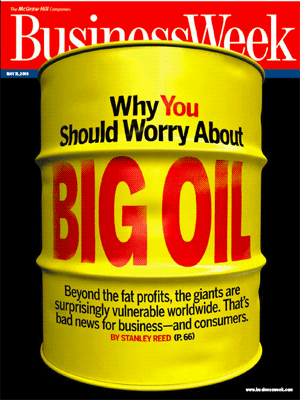
Apparently, last week’s International Energy Agency (IEA) numbers regarding future oil supplies were fudged to protect the innocent or at least our frail economic recovery. According to a whistleblower who whispered in the ear of The Guardian, the world is much closer to running out of oil that we think.
So, what is to be gained or lost by such skullduggery? Stockbrokers, bankers and oil investors jumping out of windows…sure, but what is the downside? (Insert sarcasm here).
The comments in the UK’s respected Guardian stated that the IEA has inflated its 2009 report of oil reserves for fear that the truth would shock world markets into a reactionary panic. IEA is alleged to have put its role as an industry watchdog in the kennel for the time being to fend off a potential buying panic…even at the risk of being exposed for overplaying supplies and chances for finding increased reserves.
On face value this might seem to be based on at least a modicum of twisted logic, but what are the ramifications for world governments who govern, plan and even invest based on IEA’s data? Consider that they also develop their own energy policies based on such essential information.
According to the Guardian’s high-level IEA source, estimates of global oil production growing from its current level of 83 million barrels per day to 105 million barrels per day are as bogus as the Tooth Fairy. The source said many IEA officials believe even 90 million barrels per day is unreachable, but the agency will not lower its forecast because it fears panic could spread through financial markets.
If we have indeed entered the “Peak Oil Zone” (that strange and unfamiliar place where we actually feel the pressure to get real about “energy policy” not oil policy) then it is time to fess up like an alcoholic at an AA meeting. “Hi my name is Joe Consumer and I have a petroleum problem.” (more…)

 As Ken pointed out in
  This time it is a
  If you farm or if you eat you will be affected by a lovely body of water many of us will never see called the Chesapeake Bay. This is because “The Bay” as it is known affectionately is being used as a test case or a template for how the Environmental Protection Agency (EPA) will deal with watersheds across the nation. Unfortunately, those pushing the agenda blame many of the Bays woes on agriculture.
 Agriculture in the U.S. represents 7% of the GHG (Greenhouse Gas) problem but 20% of the potential solution, according to US Department of Agriculture Secretary Tom Vilsak. National Corn Growers Association (NCGA) President Darrin Ihnen, on hand to hear Sec. Vilsak speak at Agriculture and Rural Development Day at the Copenhagen at the Climate Change Conference, said the Secretary emphasized the linkage between climate change and food security as the most important challenge facing agriculture. According to Vilsack, our efforts should focus on three areas — research, adaptation and mitigation.
  Apparently, last week’s International Energy Agency (IEA) numbers regarding future oil supplies were fudged to protect the innocent or at least our frail economic recovery. According to a whistleblower who whispered in the ear of The Guardian, the world is much closer to running out of oil that we think.